
Published:
Updated:
How A&P Mechanics Keep Passengers Safe
Every passenger trusts the aircraft the moment they step aboard. That trust exists because A&P mechanics protect airworthiness through skill, precision, and constant awareness of risk. Their work forms the core of A&P safety, and their decisions shape every safe takeoff and landing. Through daily action that keeps each aircraft in reliable condition, A&P mechanics keep passengers safe, making them an integral part of the aviation industry. Their work matters because safety depends on consistent attention to detail and complete knowledge of aircraft systems.
What A&P Mechanics Do Each Day
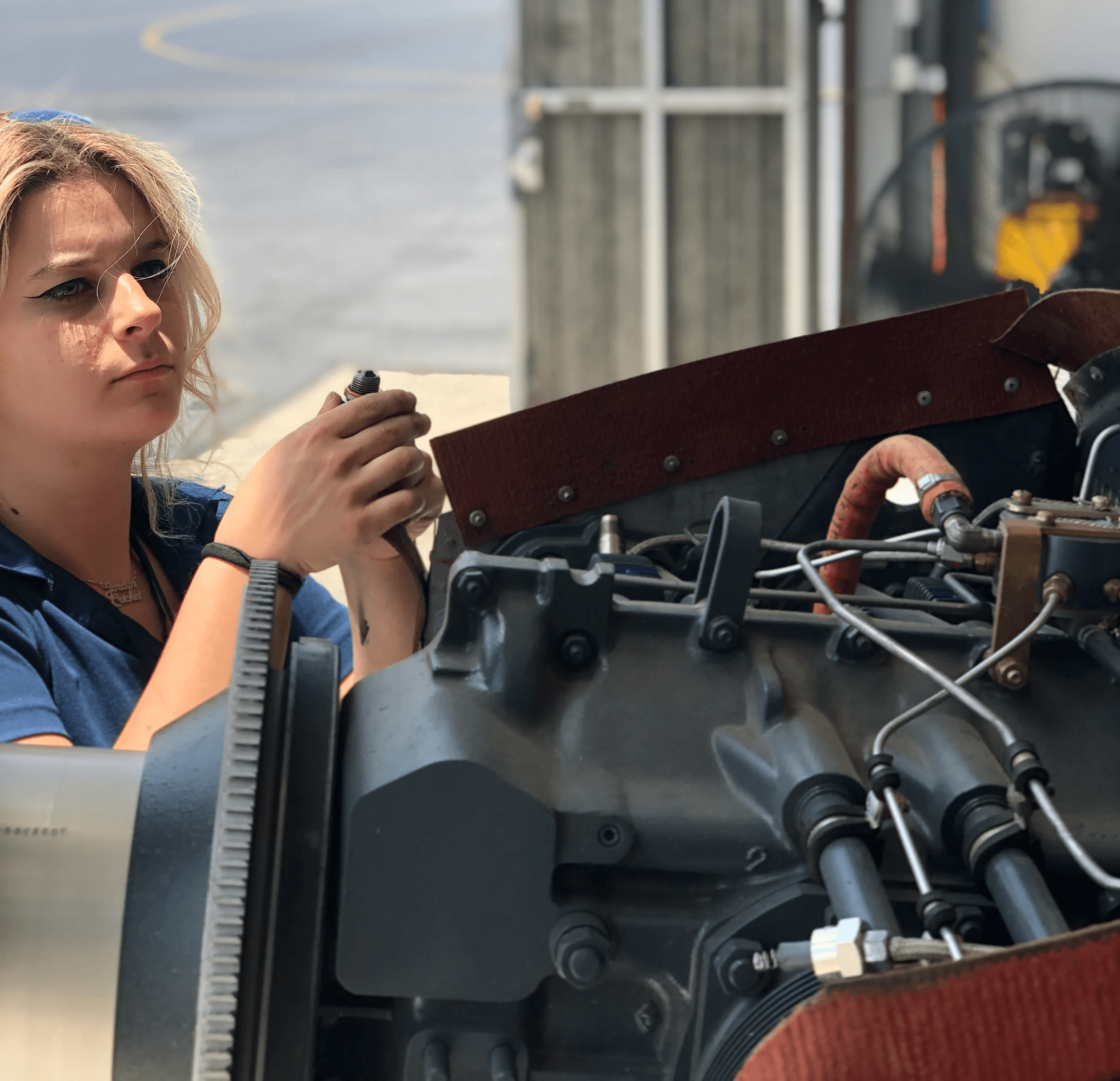
A&P mechanics handle the crucial work that keeps aircraft safe and ready. They inspect structures, engines, and systems to identify issues early. They remove worn components, install replacements, and verify the correct operation of each system in an aircraft.
Their certification allows them to confirm airworthiness. This responsibility demands full understanding of FAA procedures and strong mechanical skill. The FAA outlines these responsibilities and requirements for certification on its official page.
They also maintain complete records by logging maintenance actions (such as when a system is checked for maintenance or a part is replaced) either by hand or digitally. Each entry must meet federal standards, because documentation supports safe operation and future maintenance decisions. Logging records daily ensures each aircraft remains compliant with federal safety standards and flight-ready.
Protecting Passenger Safety
A&P mechanics keep passengers safe by preventing small issues from becoming risky or dangerous.Their inspections catch structural fatigue, engine problems, and system malfunctions, among others, and their knowledge supports safe operations across thousands of flights every day.
Fast assessments support pilots who rely on accurate information before leaving the gate, with strong communication between mechanics and the flight deck strengthening the entire safety chain. Mechanics also verify that repairs follow FAA-approved methods, which adds another layer of protection for everyone on board.
A&P mechanics act with full responsibility during each project, understanding that their work shapes every safe landing. This sense of purpose drives the high level of A&P safety seen across the aviation industry while also serving as motivation for A&P mechanics who strive to make an impact through their work.
A&P Work Makes a Difference to Keep Passengers Safe
A&P mechanics make flying possible, since work protects lives, supports global travel, and creates trust in modern flight. Their skill keeps fleets reliable and safe, even as aircraft technology advances.
For those who value hands-on work and real responsibility, becoming an A&P mechanic offers purpose, impact, and long-term stability. The aviation industry depends on mechanics every single day, making it a fulfilling and worthwhile career.
If you’re ready to launch your career as an aviation maintenance technician, contact A&P Mechanic Institute (APMI) at [email protected] today to connect with the Admissions Department and learn more about enrollment opportunities.
Meet The Author:
John Detrick
John Detrick is the Chief Mechanic Instructor at A&P Mechanic Institute in Lakeland. John holds a Bachelor of Science degree in Aviation Science and a Master of Science degree in Aeronautics. John earned his A&P certificate in 1990 and has since worked in the aviation industry, building up a wealth of knowledge in aircraft maintenance.
Related Posts

A&P School
-
Sep 24, 2026
A&P School ROI: Is the Investment Worth It?
A&P school delivers a strong ROI, often with lower costs and faster earnings than a four-year degree. Get certified in 15 months. Learn more today.
John Detrick

A&P School
-
Sep 16, 2026
How Long Does A&P Certification Take?
A&P certification takes 18 to 24 months at most schools. Complete our accelerated program in just 15 months in Lakeland, FL. Contact us today.
John Detrick

Careers
-
Sep 11, 2026
Aircraft Maintenance Career Outlook
A&P mechanics earn competitive wages and enjoy lasting job security in a growing field with nationwide demand. Explore FAA-approved training programs now.
John Detrick