Published:
Updated:
How to Become an Aircraft Mechanic
As a career changer or recent graduate, becoming an aircraft mechanic can be a rewarding path to a stable, well-paying career. When you start researching programs, you face tough choices. Traditional degrees cost tens of thousands of dollars and take years to complete, while accelerated programs can leave you feeling like just another face in the crowd.
Aviation maintenance is one of the fastest-growing skilled trades in the country, but not all training programs deliver the same value. This guide will show you how to become an aircraft mechanic — the official FAA requirements, the skills you'll need and how to find a program that gets you certified faster, for less, with real support.
Why Is Demand for Aircraft Mechanics Soaring?
If you're exploring how to become an aviation mechanic, you're entering the field at the right time. The aviation industry is facing a significant shortage of qualified technicians, creating a real opportunity.
Growing Industry and Critical Skills Gap
The aviation industry faces a critical skills gap, with experts projecting a need for 710,000 new maintenance technicians globally in the next two decades. This demand is fueled by fleet expansion and an aging workforce.
Commercial air transport anticipates an ongoing shortage of certified mechanics. This persistent skills gap underscores strong job security for qualified professionals in the field.
Excellent Earning Potential and Long-Term Job Security
Aircraft and avionics equipment mechanics and technicians earn a median annual wage of $79,140, which is a solid starting salary compared to the debt many four-year college graduates carry.
A&P mechanics can enter the workforce in a fraction of the time it takes to complete a traditional degree, with significantly less debt. You're earning while university graduates are still studying, building experience in a career that can't be automated or outsourced. These are rewarding aviation maintenance careers built on skills that remain valuable throughout your working life.
It's also worth noting that an A&P license is one of the most AI-resistant credentials in the workforce today. Aviation maintenance requires hands-on judgment, safety accountability, and FAA sign-off authority that no machine can replicate — and as autonomous aircraft, inspection drones, and robotic systems continue to grow in aviation, it will most often be certificated A&P mechanics who are tasked with maintaining and certifying that technology. You won't be replaced by AI — you'll be the one keeping it airworthy.
What Does an Aircraft Mechanic Actually Do?
Understanding what the job entails is essential when you're deciding how to become an airplane mechanic. This skilled technical labor combines diagnostic thinking, hands-on repair and strict safety protocols.
A Day in the Life of an A&P Technician
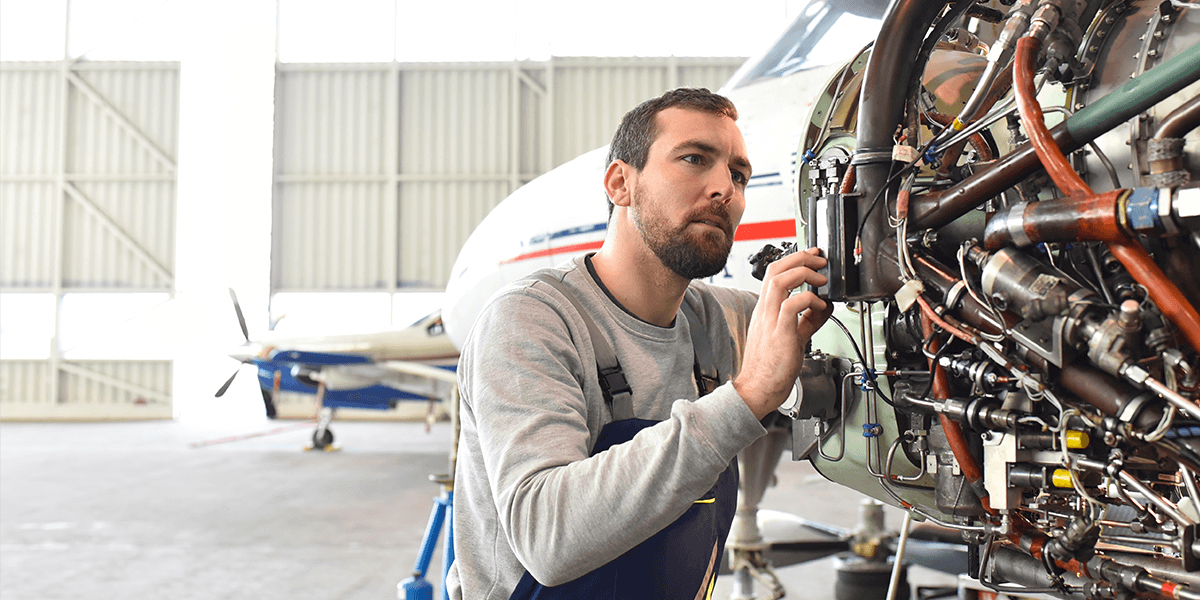
Aircraft mechanics, officially called Aircraft Maintenance Technicians (AMTs), keep aircraft safe and airworthy. The Bureau of Labor Statistics describes their work as inspecting airframes, engines and systems, diagnosing mechanical and electrical problems, repairing or replacing faulty components and documenting all maintenance work.
Some mechanics are generalists who work across different aircraft types. Others specialize in particular areas — like engines, hydraulics or avionics.
Understanding the Key Specializations
The Airframe (A) and Powerplant (P) certificates together give you the skills required by employers to sign off work completed on the whole aircraft. The Airframe alone allows you to sign off work done on all the systems and structure of the aircraft, while the Powerplant allows you to sign off work done on engines and propellers. Whether you're interested in how to become a helicopter mechanic or want to work on commercial jets, the A&P certification is your entry point.
How to Become an Aircraft Mechanic: The Official FAA Path
The Federal Aviation Administration (FAA) sets the standards for aircraft mechanic certification in the United States — universal requirements every mechanic must meet to legally work on aircraft.
1. Meet the Eligibility Requirements
According to the FAA, you must be at least 18 years old and able to read, write, speak and understand English. No prior aviation experience is required, as Part 147 programs are designed to take you from beginner to certified mechanic.

2. Choose Your Path
The FAA recognizes two primary pathways. The first is attending an FAA-approved Part 147 aviation maintenance technician school. The second is gaining equivalent experience through military aviation maintenance or on-the-job training under a certificated mechanic, but this route typically takes significantly longer.
For most career changers and recent graduates, a Part 147 school offers the fastest path.
3. Pass Your Exams
Certification requires passing three types of exams for each rating. The FAA's testing requirements specify that you'll take written knowledge tests, an oral exam and a practical test. You must take the General knowledge test first, followed by the Airframe and Powerplant tests if you're pursuing both ratings.
Is This Career the Right Fit For You?
This work requires a specific set of skills and traits. If you have these skills, or you're willing to develop them, this can be a rewarding career for you.
The Skills and Traits of a Successful Mechanic
The Bureau of Labor Statistics identifies several key qualities that successful aircraft mechanics share:
Attention to detail: Small oversights can have serious safety consequences.
Dexterity: You'll work with hand tools, power tools and precision instruments in tight spaces.
Observational skills: Diagnosing problems requires the ability to spot irregularities.
Physical strength: The work involves lifting heavy components and standing for extended periods.
Problem-solving ability: Troubleshooting often requires creative thinking.
Where Your A&P Skills Can Take You
One of the most underrated benefits of A&P certification is the transferability of its skills. The systems you learn to maintain are used across multiple industries. Consider the following:
Theme parks: Disney and Universal adhere to strict safety standards, and many rides use hydraulic and pneumatic systems similar to aircraft landing gear.
Transport: High-speed rail systems require technicians with electrical and hydraulic maintenance knowledge.
Mechanics: Major employers like Amazon, energy companies and utilities need skilled workers who understand complex mechanical systems.
Finding the Right A&P School
Once you've decided to pursue certification, the next question is where to train. Not all programs deliver the same return on your investment.
Why a Focused Program Beats a 4-Year Degree
While some students spend four years in a university aviation program, graduates of focused A&P schools can be working in the field, earning a salary and building experience within a year or two.
Trade schools and Part 147 programs concentrate exclusively on the skills you need for FAA certification. You're learning airframe systems, powerplant maintenance and FAA regulations from day one. That means you graduate faster, with less debt and enter the workforce while university students are still in class.
For recent high school graduates, this can mean starting a career years earlier than peers who choose traditional college paths.
What to Look For
When evaluating A&P programs, focus on these criteria:
FAA-approved curriculum: Your program must meet FAA Part 147 standards.
Small class sizes: More one-on-one time with instructors means better support.
Hands-on training: Look for programs with well-equipped labs and instructors who've worked as mechanics.
Career support: Guaranteed job interview opportunities or strong industry connections make all the difference.
Financial support: Partnerships with lenders, such as Sallie Mae, can make training more accessible. Check whether the school offers financing and tuition options.
Choosing the right program is a critical decision that shapes both your training experience and your career trajectory.
Take the Next Step in Becoming an Aircraft Mechanic
At A&P Mechanic Institute, you're not just a number. You're a future aviation professional getting hands-on training in small classes with instructors who know your name. Our FAA-approved program is designed to get you certified faster and for less than traditional college routes — and with guaranteed interviews through our parent group's flight schools, you'll have a direct path to your first job.
Ready to take the next step? Whether you have questions about our program details and tuition or your career goals, we're here to help. Apply to our program or give us a call to kick-start your aviation career.

Meet The Author:
John Detrick
John Detrick is the Chief Mechanic Instructor at A&P Mechanic Institute in Lakeland. John holds a Bachelor of Science degree in Aviation Science and a Master of Science degree in Aeronautics. John earned his A&P certificate in 1990 and has since worked in the aviation industry, building up a wealth of knowledge in aircraft maintenance.
Related Posts

A&P School
-
Sep 24, 2026
A&P School ROI: Is the Investment Worth It?
A&P school delivers a strong ROI, often with lower costs and faster earnings than a four-year degree. Get certified in 15 months. Learn more today.
John Detrick

A&P School
-
Sep 16, 2026
How Long Does A&P Certification Take?
A&P certification takes 18 to 24 months at most schools. Complete our accelerated program in just 15 months in Lakeland, FL. Contact us today.
John Detrick

Careers
-
Sep 11, 2026
Aircraft Maintenance Career Outlook
A&P mechanics earn competitive wages and enjoy lasting job security in a growing field with nationwide demand. Explore FAA-approved training programs now.
John Detrick