
Published:
Updated:
Aircraft Maintenance Career Outlook
With the rise of AI, the job market feels uncertain right now, and you're not wrong to be cautious. While some industries are contracting, aircraft maintenance is doing the opposite. The airframe and powerplant (A&P) mechanic workforce is growing, aging out and hiring, all at once.
A&P mechanics inspect, repair, and maintain aircraft to ensure they're safe to fly. You might troubleshoot an engine issue on a commercial jet one day and perform scheduled inspections on a cargo plane the next. The work is hands-on and technical.
If you've been searching for a career path that offers stability, earning potential and long-term security, becoming an aircraft mechanic is one of the best options available today.
What Does the Job Market Look Like for A&P Mechanics?
The numbers tell a clear story. In 2024, there were 160,800 aircraft and avionics equipment mechanics working across the United States. This Bureau of Labor Statistics category includes both aircraft mechanics (who work on airframes and engines) and avionics technicians (who specialize in electronic systems). The BLS projects 5% employment growth for aircraft mechanics between 2024 and 2034, translating to roughly 13,100 openings each year over the next decade — a rate faster than average for all occupations.
The majority of those openings aren't coming from industry expansion alone. They're coming from retirements. Experienced mechanics are aging out of the workforce, and the industry needs new talent to replace them.
What Aircraft Mechanics Earn: Salary Data From Entry Level to Senior Roles
If you're evaluating this career, you're likely curious about your earning potential. The national median wage for aircraft mechanics in 2024 was $79,140. At the entry level, A&P mechanics typically start around $45,760 a year. With a few years of experience, mid-level mechanics earn closer to $79,140 annually. Those who work in specialized roles or in high-demand environments can reach $120,000 a year or more.
Specialization accelerates that earning trajectory. A&P mechanics who pursue type ratings for specific aircraft models, additional avionics certifications or roles in manufacturing and engineering tend to move up the pay scale faster than those in general maintenance positions. The A&P mechanic job outlook reflects this reality — employers are actively seeking skilled mechanics, and they're willing to pay for expertise.
Beyond salary, many mechanics working for airlines or large operators receive competitive benefits packages that include health insurance, retirement plans, and flight benefits for themselves and their families. Compare that path to a traditional four-year degree. While others are accumulating student debt and delaying income, you're earning while you learn. A&P Mechanic Institute offers financing options and transparent program costs, so you can make an informed decision about your investment without taking on the debt burden of a bachelor's degree.
The A&P Mechanic Shortage: What It Means for You
The aviation industry is facing a significant mechanic shortage, and if you're entering the field now, that shortage is a competitive advantage. A 9% shortage of certificated mechanics exists in North America as of 2026. That gap is projected to reach nearly 20% by 2028, which is roughly 30,800 workers. The 17,000-worker deficit by 2034 will be driven by increasing maintenance requirements as fleets age and the departure of experienced mechanics from the workforce.
Because fewer competitors are entering the field, you'll see faster placement and advancement opportunities. Rather than screening candidates out, employers are actively recruiting them in. Demand is outpacing supply, which means new mechanics are moving into lead roles faster than they would have a decade ago. This upward pressure on wages is pushing starting salaries and benefits higher, while geographic flexibility remains nearly unlimited — aircraft mechanic job demand exists nationwide.
The labor market has moved in workers' favor, and the career opportunities with an A&P certification reflect this change. Airlines, maintenance repair organizations, cargo carriers, private operators and defense contractors are all hiring. In many cases, you get to choose where you work, not the other way around.

Why AI Will Never Replace A&P Mechanics
One of the most common concerns about any career today is automation. If you're worried that artificial intelligence (AI) will replace aircraft mechanics, here's the reality: it won't. Technology is still advancing, but Federal Aviation Administration (FAA) regulations require a human to sign off on all aircraft maintenance work.
Title 14 of the Code of Federal Regulations establishes the legal framework for aviation in the United States, and Part 43 outlines aircraft maintenance requirements in explicit terms. Only a certificated mechanic with an A&P license can approve an aircraft for return to service. This legal requirement exists because aviation maintenance is safety-critical work that requires human judgment, accountability and expertise.
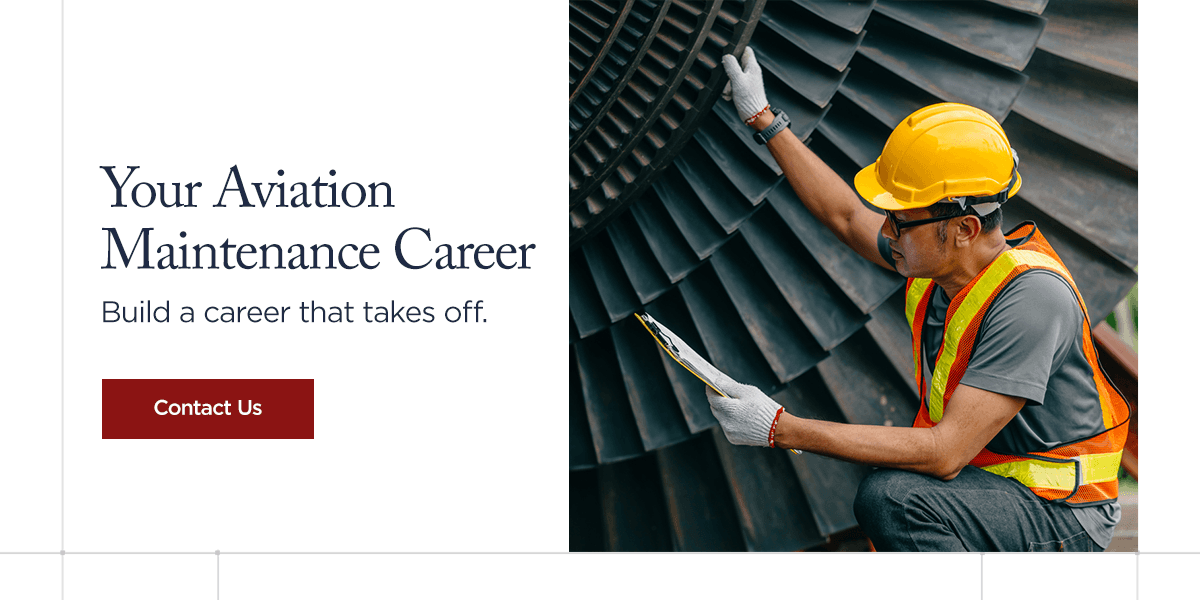
AI might assist with diagnostics or flag trends in sensor data, but you're the one who inspects the turbine blades, interprets wear patterns and decides whether an aircraft is airworthy. No two aircraft age or fail identically, and that real-world variability demands human expertise that AI can't replicate.
Experience a Resilient, Stable Career
The job outlook for aviation maintenance technicians points to a secure career path. Aviation maintenance is recession-resistant. Aircraft fleets must be maintained, regardless of economic conditions, which makes this work essential rather than discretionary. Cargo aviation remains operational even during downturns, because freight demand persists when passenger travel slows.
The career ladder is clear. You can pursue optional specializations like type ratings for specific aircraft models, additional avionics certifications or roles in manufacturing and engineering. Experienced mechanics often transition into supervisory positions, quality assurance or technical training roles. The long-term advancement opportunities in aviation maintenance are skills-based, not just seniority-based, which means you control your trajectory.
Your A&P certification opens doors across the country. Whether you want to work for a major airline in a coastal hub, a cargo carrier in a logistics center or a private operator in a smaller market, your credential travels with you.
Start Your Aviation Maintenance Career at A&P Mechanic Institute
The aviation maintenance shortage is projected to peak in 2028, which means the next few years represent a golden window for new mechanics entering the field. Whether you're a recent high school graduate weighing your options or a working adult ready for a career change that offers real security, A&P Mechanic Institute provides a clear path forward.
Our FAA-approved program prepares you to earn both your Airframe and Powerplant certificates, the industry-standard credentials required to work as an aircraft mechanic. With day and night class options to fit your schedule, you can complete the program whether you're working part-time or full-time as you learn.
Learn more about how to become an aircraft mechanic and explore your financing options to get started.
Meet The Author:
John Detrick
John Detrick is the Chief Mechanic Instructor at A&P Mechanic Institute in Lakeland. John holds a Bachelor of Science degree in Aviation Science and a Master of Science degree in Aeronautics. John earned his A&P certificate in 1990 and has since worked in the aviation industry, building up a wealth of knowledge in aircraft maintenance.
Related Posts

A&P School
-
Sep 24, 2026
A&P School ROI: Is the Investment Worth It?
A&P school delivers a strong ROI, often with lower costs and faster earnings than a four-year degree. Get certified in 15 months. Learn more today.
John Detrick

A&P School
-
Sep 16, 2026
How Long Does A&P Certification Take?
A&P certification takes 18 to 24 months at most schools. Complete our accelerated program in just 15 months in Lakeland, FL. Contact us today.
John Detrick

-
Aug 25, 2026
FAA Part 147: The Complete Guide to Aviation Maintenance Technician Training
FAA Part 147 schools provide federally approved aviation maintenance training with hands-on experience. Compare programs and start your career today.
John Detrick